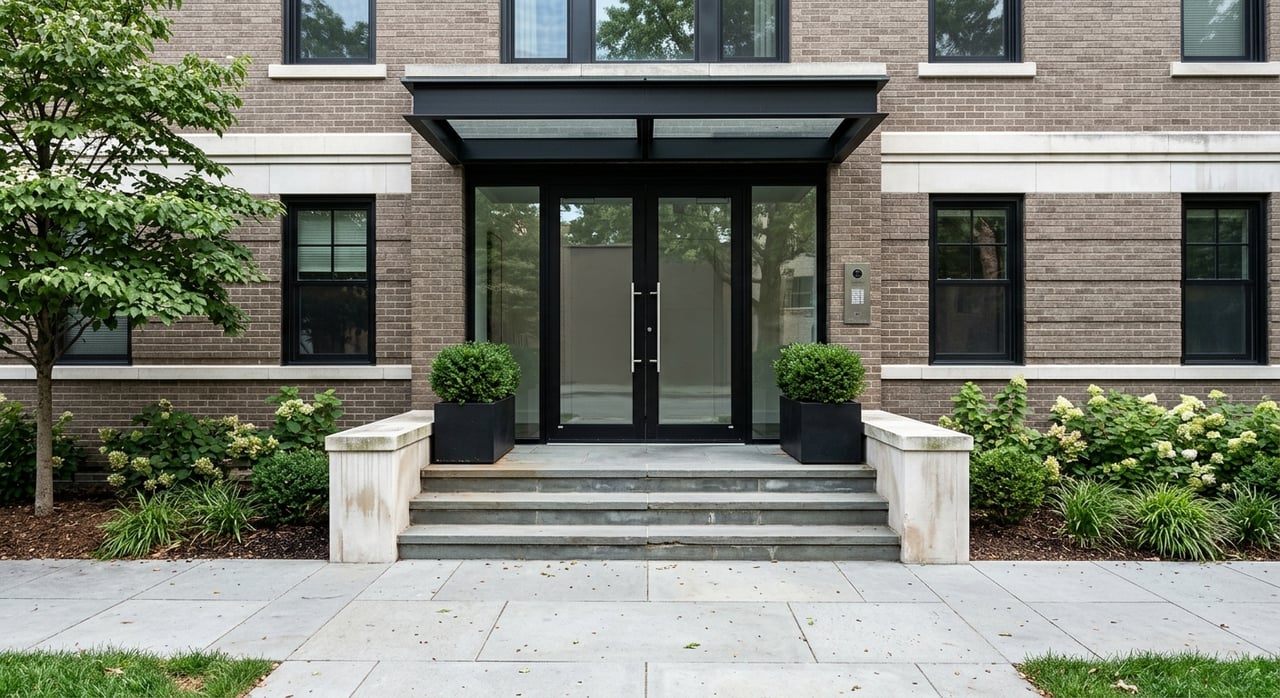
Compare Rockville Centre Condos and Co-ops with Confidence
June 25, 2026
June 25, 2026
Looking for a lower-maintenance home in Rockville Centre, but not sure whether a condo or co-op fits you better? You are not alone. In this village, attached housing is a smaller niche than single-family homes, and the differences between condos and co-ops can have a big impact on your budget, timeline, and buying experience. This guide will help you understand where to look, what prices and monthly costs can look like, and what questions to ask before you make a move. Let’s dive in.
Rockville Centre is an incorporated village on the South Shore of Long Island in Nassau County. According to the village, the housing stock is primarily one-family homes, with some townhouses, condominiums, and apartments. The Long Island Rail Road commute to Manhattan is about 35 minutes, which helps explain why condos and co-ops here appeal to buyers who want a more compact, commuter-friendly lifestyle.
In practice, condos and co-ops play very different roles in the local market. Current public listing pages show only a small number of condo listings, while co-ops appear across a much broader range of buildings and addresses. That means if you want a condo in Rockville Centre, your choices may be more limited, while co-op buyers often have more inventory to compare.
Most Rockville Centre condos are clustered in a few recognizable developments rather than spread evenly throughout the village. That makes it easier to narrow your search if you know the style of living you want.
Cathedral Gardens at 55 Clinton Avenue is a 55-plus condo community in the village core. Current and recent listings describe it as an elevator building with assigned parking, a lobby, a recreation room, and storage.
For buyers who want one-level living and building amenities, this is one of the clearest condo options in town. It also reflects a common local pattern, where condo inventory is concentrated in specific buildings rather than scattered block by block.
Another notable condo building is 99 South Park Avenue. Listings describe it as a luxury elevator building near downtown and the LIRR, with concierge or doorman service, garage parking, terraces or balconies, and in-unit laundry.
If your priority is convenience to the village center and train access, this kind of building may stand out. It also sits at the higher end of the local condo market based on current visible listings.
The Meadows at 106 Morris Avenue offers a different condo experience. Listings describe private elevators, attached two-car garages, and three-level townhouse layouts close to the village and the rail station.
For some buyers, this is an appealing middle ground between a house and a traditional apartment-style unit. You may get more private space and a more vertical layout, while still keeping the structure and ownership model of a condo.
Co-ops are much more widely distributed through central Rockville Centre. Public listings show many co-op buildings around South and North Village Avenue, Merrick Road, South and North Centre Avenue, Forest Avenue, Maine Avenue, Lincoln Avenue, and Lenox Road.
Many of these buildings are older brick, pre-war, or courtyard-style properties near the village center and LIRR. For buyers focused on walkability and lower exterior maintenance, that can be a strong draw. It also means co-op options often feel more varied in age, layout, and price point than local condos.
One of the biggest local patterns is the age and style of the buildings. Current examples show condos built in 1984, 2006, and 2009, while co-op examples include buildings from 1938, 1951, 1956, and 1969.
That does not mean one category is always better than the other. It does mean you should expect different tradeoffs when you compare them.
| Feature | Condos | Co-ops |
|---|---|---|
| Local supply | Smaller segment | Broader selection |
| Typical building style | Newer, luxury, or townhouse-like | Pre-war, brick, courtyard, mid-century |
| Ownership | Own your unit | Own shares and a proprietary lease |
| Taxes | Separately taxed | Often included in maintenance |
| Board approval | Generally no power to approve or reject purchasers, though some may have a right of first refusal | Usually requires application package and may include board interview |
| Monthly charges | HOA/common charges plus separate taxes | Maintenance, often bundling taxes and some utilities |
Current condo listings in Rockville Centre run roughly from $550,000 to $925,000. Visible examples include units at 55 Clinton Avenue around $550,000 to $585,000, a listing at 99 South Park Avenue around $769,000, and a pending unit at 106 Morris Avenue around $925,000.
That makes the condo segment relatively limited and more upper-end compared with many local co-ops. For buyers who want condo ownership in the village, it is important to be realistic about both price and supply.
Co-op pricing covers a broader range. Recent examples include a studio at 61 Maine Avenue around $225,000, a unit at 43 North Forest Avenue around $320,000, 200 North Village Avenue around $335,000, 406 Merrick Road around $361,000, 90 South Park Avenue around $375,000, and 111 South Centre Avenue around $455,000.
Larger or more upgraded co-ops can move into the low to mid-$500,000s, as seen in examples at 106 South Village Avenue and 10 Lenox Road. For many buyers, that wider spread makes co-ops the more accessible entry point into Rockville Centre ownership.
Price is only part of the story. In Rockville Centre, your monthly carrying cost can vary sharply by building, and the structure is very different between condos and co-ops.
In many co-ops, maintenance can bundle major expenses together. Local examples show maintenance that may include taxes, heat, water, and sometimes sewer. One listing at 106 South Village Avenue shows maintenance of $1,511.67 without STAR and $1,422.25 with STAR, while 43 North Forest Avenue lists $999.75.
Other listings note that taxes and heat are included, or that maintenance includes taxes, water, and heat. Some buildings may also charge separately for parking or storage, so you need to look beyond the headline number.
Condos are structured differently. A current listing at 55 Clinton Avenue shows a $620 monthly HOA fee plus separate annual taxes of $8,486, while another unit in the same development shows a lower HOA fee of $465 per month.
The HOA may cover common-area maintenance, exterior or grounds care, hot water, sewer, snow removal, and trash. Under New York law, condo unit owners pay common charges and each unit is separately taxed, so your monthly ownership cost usually combines HOA charges and property taxes.
For many buyers, the biggest difference between a condo and a co-op is not the layout or amenities. It is the buying process.
In a co-op, you are typically buying shares in a corporation along with a proprietary lease. That usually means submitting a detailed application package, and you may also be interviewed by the board. The Council of New York Cooperatives and Condominiums recommends allowing about six weeks from a complete package to a response, though some buildings may take longer.
The New York Attorney General advises buyers to read the offering plan carefully, consult an attorney before signing, and review board minutes, financial reports, and any local building-code or maintenance issues. In older buildings, it is especially smart to ask about facade, roof, elevator, plumbing, boiler, and electrical work.
Condo ownership is usually simpler on the approval side. Under New York law, condo boards generally do not have the right to approve or reject purchasers, though some declarations may include a right of first refusal. That can make condos feel more straightforward, even if the upfront price is higher.
Because building rules vary so much in Rockville Centre, you should compare each opportunity carefully. Two homes with similar asking prices can have very different monthly costs, financing options, and purchase timelines.
Before you commit, ask questions like these:
These questions are especially important because current Rockville Centre listings show that financing rules can differ widely from one co-op to another. One local listing says offers must be cash, while another advertises only a 10 percent down payment requirement.
Rockville Centre condo and co-op buildings offer a range of amenities, but not every building has the same package. Current local examples mention elevators, assigned or garage parking, laundry rooms, bike rooms, storage lockers, courtyard or garden settings, live-in supers, recreation rooms, terraces or balconies, and concierge or doorman service.
That is why a building-by-building review matters. A lower monthly fee may come with fewer services, while a higher fee may reflect bundled utilities, staffing, or stronger amenity offerings.
If you want the broadest selection and a lower entry price, a co-op may give you more options in Rockville Centre. If you prefer a more straightforward ownership structure, newer building styles, or luxury features, a condo may be the better fit.
The right answer depends on more than price alone. You need to weigh your timeline, comfort with board review, financing strategy, monthly budget, and how much value you place on location, amenities, and building style.
Buying a condo or co-op in Rockville Centre is rarely just about finding an available unit. It is about understanding the building, the rules, and the true monthly cost so you can make a confident decision. If you want local guidance on comparing buildings, reviewing carrying costs, and navigating the condo or co-op process in Rockville Centre, connect with Kevin Leatherman.
At Kevin Leatherman, our clients always come first. I provide honest, professional service and uphold integrity in everything we do. Let’s work together today.