Buying A Historic-Style Home In Garden City
June 4, 2026
June 4, 2026
Looking at a historic-style home in Garden City? You are not just buying square footage. You are buying into a village where architecture, curb appeal, and preservation have long shaped the local identity. If you want the charm of an older home without walking into expensive surprises, this guide will help you understand what to look for, what to budget for, and how to navigate the process with more confidence. Let’s dive in.
Garden City stands out because its character was planned from the start. According to the village, it was developed with wide avenues, extensive plantings, and well-built homes on spacious lots, and that early vision still influences how the community looks and feels today.
That history matters when you shop here. The local historical society operates from an original 1872 A.T. Stewart-era Victorian building and maintains an Historic Structure Survey of pre-1935 residential and non-residential buildings. In practical terms, that means you are buying in a place where older architecture is part of the village identity, not just a leftover from the past.
For buyers, this creates a very specific appeal. You may find homes with more detail, stronger street presence, and design elements that are hard to replicate in newer construction. It also means you need to think carefully about condition, maintenance, and renovation rules before you make an offer.
Because Garden City grew through important early-20th-century phases, many historic-style buyers will likely encounter Colonial Revival, Dutch Colonial, and Tudor Revival homes. Each style has features that affect both value and future maintenance.
Colonial Revival homes are often defined by symmetry and formal street-facing design. You may see side-gabled or hipped roofs, front porches, columns or pilasters, and entry details like fanlights or sidelights.
These details are not just decorative. Original entries, rooflines, porch elements, and windows often help define the home’s character. If you are considering updates, it is smart to treat these features as long-term assets rather than easy items to replace.
Dutch Colonial homes are closely related to Colonial Revival homes, but the standout feature is usually the gambrel roof. Dormers are also common and can add both usable space and architectural charm.
From a buying standpoint, the roof shape matters. A gambrel roof, dormers, and their related flashing details can all affect future maintenance needs. During inspections, these areas deserve close attention.
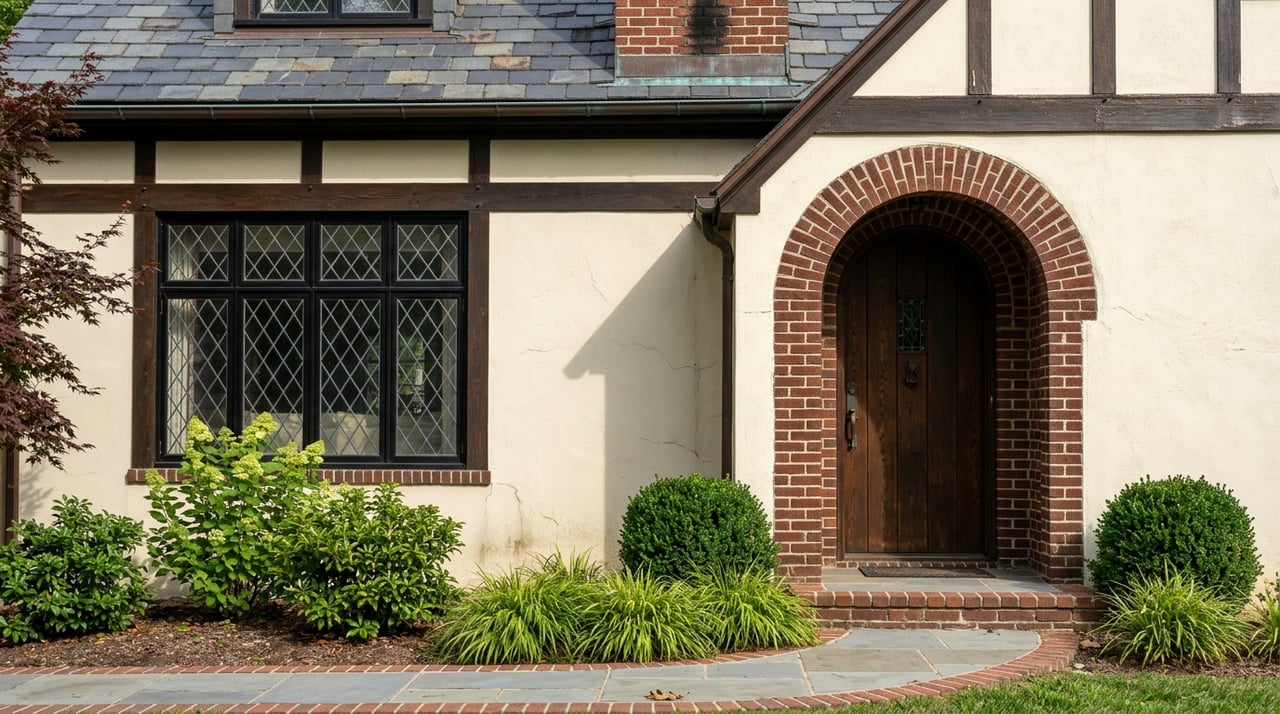
Tudor Revival homes have a very different visual identity. Common features include steeply pitched gables, half-timbering, stucco or mixed masonry, arched entries, multipane windows, and prominent chimneys.
These homes often deliver strong curb appeal, but they can also come with specialized repair needs. Chimneys, masonry, windows, and decorative exterior materials may need repair or replacement in a way that preserves the original look rather than simplifies it.
When you buy an older home, style is only part of the story. Condition matters just as much, and in many cases it matters more.
The National Park Service identifies uncontrolled moisture as the most common cause of deterioration in older and historic buildings. That makes water intrusion one of the biggest issues to evaluate in a Garden City home purchase.
Ask your inspection team to look closely at the roof, flashing, dormers, chimneys, site drainage, grading, basement dampness, and ventilation. A beautiful older home can become an expensive project very quickly if water has been getting in over time.
Roofs do more than keep water out. On historic-style homes, they are often central to the home’s appearance.
The National Park Service recommends repairing historic roof features in kind when possible and using compatible substitutes only when necessary. For you, that means roof work may involve more thought and higher costs than a standard replacement on a more generic house.
Original windows are often one of the first things buyers question. But according to the National Park Service, many historic windows have lasted more than 100 years, and maintenance, weatherstripping, and storm windows can often improve performance without full replacement.
That is an important budgeting point. If a seller has older windows, do not automatically treat that as a total replacement project. In many cases, repair may be the smarter first step.
If you are buying an older home, pre-renovation environmental checks matter. The EPA says homes built before 1978 are more likely to contain lead-based paint, and 87% of homes built before 1940 have some lead-based paint.
The EPA also notes that you cannot tell by sight whether a material contains asbestos. If future work could disturb older floor tile, ceiling tile, pipe wrap, or similar materials, it is wise to have suspected materials evaluated by trained professionals before renovation begins.
Older homes often need upgrades to electrical, plumbing, heating, or cooling systems. Even when the house is well cared for, systems may not reflect current buyer expectations.
In Garden City, that matters because many types of work require permits. The village requires permits for building work, including many alteration, plumbing, drainage, heating, air-conditioning, ventilating, refrigeration, and electrical jobs. A project that seems simple on day one may need review, paperwork, and sign-off before work starts.
If you love the look of a historic-style home but plan to update it, local process matters just as much as design ideas.
Garden City has an Architectural Design Review Board that examines exterior design to maintain standards of appearance. The village code also ties permit approval to any other board approvals that may be required.
For buyers, the takeaway is straightforward. Visible exterior changes may involve more than hiring a contractor and picking materials. Your timeline, design options, and final scope may all be shaped by village review.
The local code is especially relevant for one-family homes when additions or exterior alterations are substantial. That includes work that significantly changes the style or appearance of the home, or projects involving 30% or more of the existing building coverage.
If you are buying with a major addition or visible redesign in mind, it is smart to investigate the approval path early. Doing that before you close can help you avoid surprises later.
Some buyers assume that a home’s historic status creates automatic restrictions on every decision. In New York, that is not necessarily the case.
According to New York State, listing on the National or State Register does not by itself prevent a private owner using private funds from altering or even demolishing a property, as long as local zoning rules are followed. That is a useful distinction, but in Garden City, local village rules and review processes are still what you need to understand most clearly.
Historic-style ownership can be rewarding, but it is rarely low-maintenance. These homes often ask for a different mindset than newer construction.
You may need to budget for periodic restoration work, specialized exterior repairs, window maintenance, chimney work, or permit-related project costs. The tradeoff is that you are preserving details that give the home and the street its lasting appeal.
In Garden City, that can matter for resale too. The local historical society argues that preservation supports the village’s character and property values, and the current market data points to strong demand.
Garden City remains a strong market by recent measures. Redfin reported a median sale price of $1.329 million in April 2026, up 9.6% year over year, with homes averaging 29 days on market and a median sale price per square foot of $664.
Realtor.com described Garden City as a seller’s market in March 2026, with a 102% sale-to-list ratio and 33 median days on market. That does not guarantee future performance, but it does suggest that well-maintained homes in this character-driven market continue to attract buyer attention.
For a historic-style buyer, the lesson is balanced. Architectural charm can support long-term appeal, but condition, maintenance planning, and compliance with local rules still play a major role in how the home performs over time.
If you are serious about buying in Garden City, a disciplined process can reduce risk and help you make a stronger decision.
A historic-style home can photograph beautifully and still need meaningful work. That does not make it a bad purchase. It simply means you need to evaluate the house as both a home and a long-term stewardship project.
This is where local experience matters. In a village like Garden City, buying well often comes down to understanding architecture, condition, permits, and resale in the same conversation.
If you are weighing older-home charm against renovation reality, working with someone who understands Nassau County’s local process can make the path much clearer. When you are ready to talk strategy, inspections, or what to watch for in a specific property, connect with Kevin Leatherman.


At Kevin Leatherman, our clients always come first. I provide honest, professional service and uphold integrity in everything we do. Let’s work together today.