
Practical Guide to Merrick Waterfront Home Buying
April 2, 2026
April 2, 2026
Dreaming about a home where you can step outside and get on the water? In Merrick’s waterfront communities, that lifestyle is real, but it comes with more moving parts than a typical inland purchase. If you are thinking about buying near the bays, creeks, or canals, this guide will help you understand the upside, the risks, and the questions worth asking before you commit. Let’s dive in.
Merrick’s waterfront housing is concentrated along the South Shore estuary system, especially near Merrick Bay, East Bay, Meadowbrook Creek, and canal-front streets. According to New York State planning materials, these areas include peninsulas, inlets, bulkheaded lots, and canal-front single-family homes that support boating and other maritime activity.
For many buyers, the appeal is not just the view. It is the ability to enjoy boating, kayaking, fishing, and a more outdoor-focused routine right from home or close to it. That lifestyle also connects well with nearby public spaces like Norman J. Levy Park & Preserve, which offers a kayak launch, fishing access, and trails.
A waterfront purchase is usually about access, not just location. Two homes may be close to each other on a map, but one may have a dock or direct canal frontage while the other does not. In Merrick, the exact parcel matters more than the neighborhood label when you are evaluating how much waterfront convenience you are actually getting.
That difference affects more than lifestyle. It also shapes maintenance needs, insurance costs, inspection priorities, and long-term planning. A home with a dock, bulkhead, or canal frontage may offer a great boating setup, but it can also require more due diligence than a similar inland property.
One of the biggest mistakes buyers make is treating flood risk like an issue to sort out later. In Merrick’s waterfront areas, it should be part of your first conversation. State reporting notes that Hurricane Irene caused severe flooding, and Superstorm Sandy brought storm surge that inundated waterfront neighborhoods, damaged thousands of homes in the corridor, and blocked roads and evacuation routes, according to New York State Homes and Community Renewal.
Flood exposure is not the same across all of Merrick. That is why broad assumptions are not enough. The best move is to check the exact property address through FEMA’s Flood Map Service Center so you know the official flood designation tied to the home you are considering.
Many buyers are surprised to learn that standard homeowners insurance does not cover flood damage. If you are buying a waterfront home, you need to discuss flood insurance early, especially if the property is in a Special Flood Hazard Area and your loan is backed by a federally regulated or insured lender. New York’s current Property Condition Disclosure Statement makes that requirement clear.
Timing matters too. FEMA notes that NFIP flood insurance policies typically have a 30-day waiting period unless an exception applies. That means it is smart to get quotes and review requirements well before closing.
Two homes on the same canal can still have very different insurance costs. FEMA’s current Risk Rating approach for single-family homes uses property-specific factors, and elevation data can affect pricing. In practice, that means your monthly carrying cost may depend on more than just the address.
New York’s disclosure rules give buyers more flood-related information than in the past, and that is a good thing. The current forms ask sellers to disclose whether the property is in a FEMA floodplain, in a Special Flood Hazard Area, or in a moderate-risk flood hazard area. The forms also address flood insurance, prior flood claims, federal disaster assistance, and whether a FEMA elevation certificate exists, as outlined by the New York Department of State.
That extra transparency helps, but it should not replace your own due diligence. The disclosure form itself tells buyers to review public records and get independent inspections instead of treating the seller’s answers as a warranty.
One detail many buyers overlook is that if a property previously received certain types of federal flood assistance, the obligation to maintain flood insurance may pass to future owners. The state disclosure form also notes that flood risk may increase over time because of sea-level rise and stronger storms, even when current maps do not fully reflect future conditions.
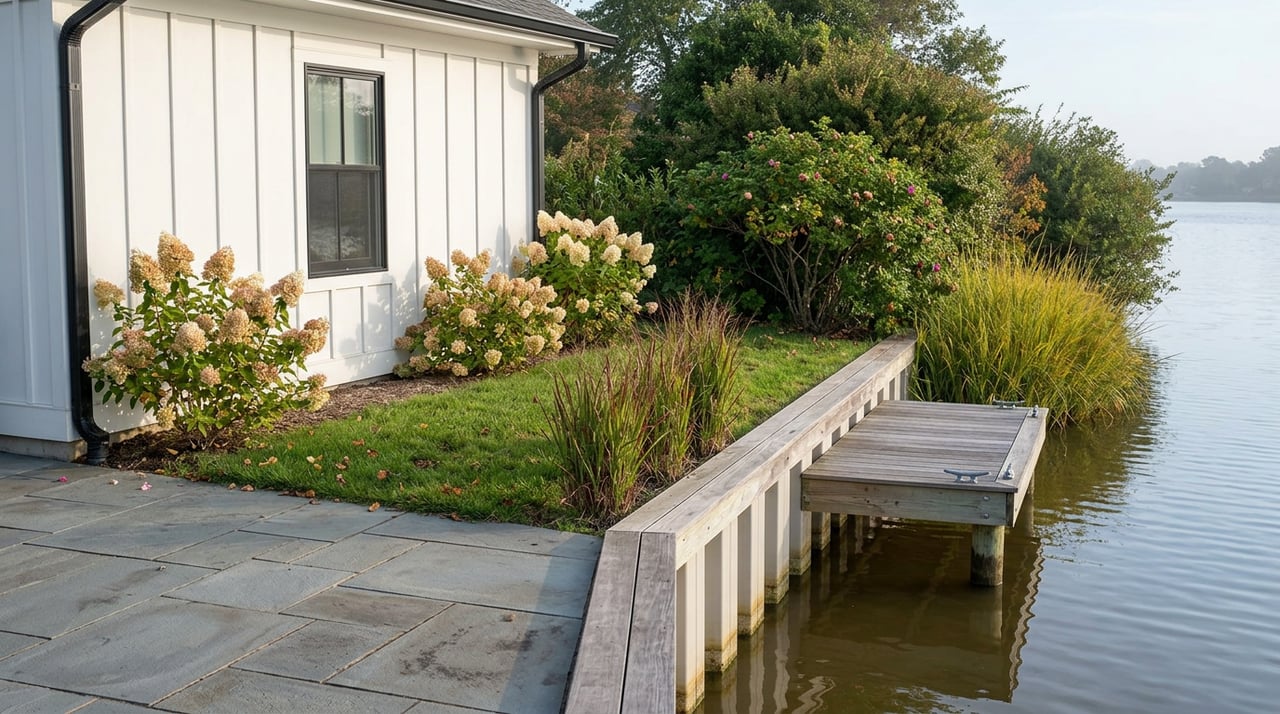
A waterfront home is not only about the house itself. You are also buying into the condition of the shoreline. If the property has a bulkhead, dock, drainage features, or a history of dredging, those items should be treated like serious capital components, not small extras.
According to NYSDEC coastal erosion guidance, coastal structures can be complex because of drainage, wave climate, geology, and structural conditions. The agency also notes that repairs may cost as much as original construction, which is why buyers should budget carefully and inspect these features closely.
Even routine-looking waterfront work can involve approvals. NYSDEC’s bulkhead replacement permit guidance explains that certain replacements and limited maintenance dredging may qualify under a general permit, but that does not mean every project is simple. If work changes the shoreline footprint or affects nearby waters, more review may be needed.
Wetlands are another big consideration. NYSDEC states that tidal wetlands line much of Long Island’s salt-water shore, bays, inlets, canals, and estuaries. That makes it important to confirm whether a property sits within or near a regulated area before you plan future improvements.
If you are hoping to expand a dock, replace a bulkhead, or make shoreline changes later, it is worth checking permit history before you buy. What looks simple on a listing sheet may be much more involved once state rules enter the picture.
The smartest way to evaluate a Merrick waterfront home is to compare total ownership cost, not just price. That means looking at insurance, maintenance, possible shoreline work, and the practical effect of flood-zone status alongside the value of water access and recreation.
This is where a process-driven approach matters. If you compare a waterfront home only by list price, you may miss the real monthly and long-term costs. On the other hand, if a property has strong documentation, manageable insurance, and a shoreline in solid condition, it may offer the lifestyle you want with fewer surprises.
Before you move forward on a Merrick waterfront property, make sure your checklist includes the basics that matter most.
Buying in Merrick’s waterfront communities can give you a distinct South Shore lifestyle, with easier access to boating, kayaking, fishing, and everyday connection to the water. At the same time, flood exposure, insurance, shoreline maintenance, and permit issues are not side notes. They are core parts of the ownership experience.
If you are considering a waterfront purchase, the goal is not to avoid the category. It is to evaluate the property clearly and make sure the numbers, condition, and long-term responsibilities fit your goals. If you want experienced local guidance on buying in Merrick or elsewhere on Nassau’s South Shore, connect with Kevin Leatherman.




At Kevin Leatherman, our clients always come first. I provide honest, professional service and uphold integrity in everything we do. Let’s work together today.