
Garden City NY Home Prices by Section: Why Medians Mislead
August 27, 2026
August 27, 2026
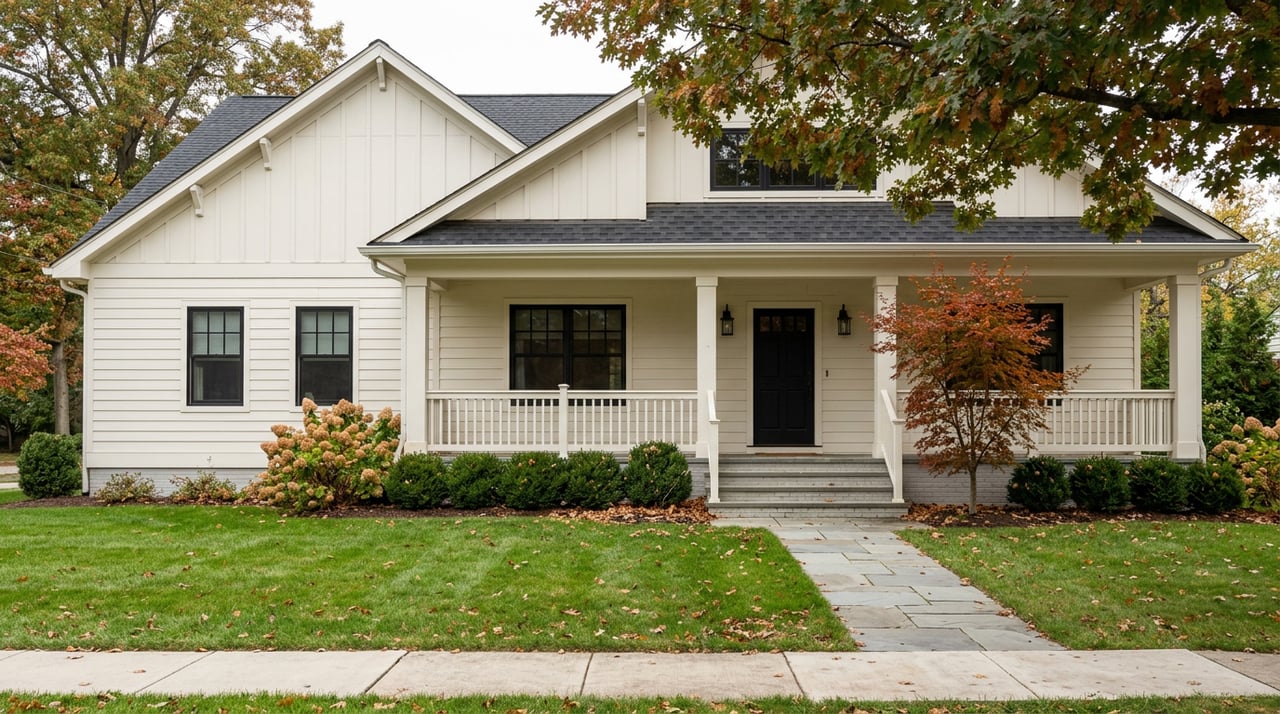
Walk from the Garden City train platform west toward the country club and the housing stock changes every few blocks. Near 7th Street, you'll pass 1930s colonials built as starter homes and expanded over decades. Keep going and, within a mile, you're standing in front of center hall colonials on half-acre lots, many rebuilt from the studs. The zip code never changes. It's 11530 the whole way. But the price a buyer pays for two houses ten minutes apart by car can differ by hundreds of thousands of dollars, and no single "median home price" pulled from a portal search captures that difference.
That gap between neighborhoods isn't new. What's new, as of August 2026, is how confusing the top-line numbers have gotten. Depending on which source you check this month, Garden City looks like a market that's either accelerating or cooling over different reporting periods. Neither read is wrong. Both are measuring different slices of the same five sections, and knowing which slice you're standing in is the only way to make sense of what your budget actually buys here.
Here's where the section confusion turns into a real problem, not just a curiosity: comps. When an agent or appraiser pulls "recent Garden City sales" without separating by section, it's easy to land on a comparison that looks reasonable on paper and falls apart in person. A renovated colonial in the Mott section gets compared against a rebuilt colonial in the Estates section sitting on three times the lot. An entry-level cape near the Eastern border gets stacked against a farm ranch near the golf courses and country clubs that anchor the Estates section. The square footage numbers might even land close. The lot sizes, renovation depth, and walkability don't.
This is the friction point that shows up most often before a deal stalls. A seller anchors to a headline that a neighbor's Estates listing just closed well above ask, prices their Mott section home the same way, and then wonders why it sits. A buyer gets a pre-approval based on the village-wide median and finds every Estates listing well out of reach while Eastern section homes look strangely affordable by comparison. Both are reacting to a number that was never built to describe their specific street.
Garden City has been informally divided into named sections for decades: Estates, Mott, Eastern, Western, and a smaller Central pocket. These aren't marketing labels invented for a listing sheet. They show up constantly in current MLS descriptions, because buyers here ask for a section by name before they ask for a price range. The table below highlights four of the five sections; Central is not included.
| Section | What you'll find | Getting around | Where it sits on price |
|---|---|---|---|
| Estates | Center hall colonials and farm ranches, half-acre-plus lots, heavily renovated or rebuilt | No walk to the village center or train station, closest to JFK flight paths | Highest in the village |
| Mott | 1930s-1950s colonials, originally starter homes, many expanded over the years | Walkable to 7th Street shops, western edge close to the Mineola LIRR stop | At or above the village median, depending on renovation |
| Western | Fewer new builds than other sections, more uniform lot layouts | Tucked away from the village's shopping and train corridor, generally quiet | Mid-range |
| Eastern | The most affordable section, bordering Hempstead | No walk to the train | Lowest in the village |
That spread is part of the story. A village-wide median doesn't describe any one of the four housing stocks shown here. It reflects activity across all five sections, weighted by whatever happened to sell or list that month.
Movoto's August 2026 snapshot shows Garden City's median list price at $1.29 million, down 7 percent from July and 6 percent from a year earlier. Days on market dropped to a median of 25, down 13 percent year over year. Read on its own, that looks like a market losing steam while somehow moving faster, which is an odd combination.
List-price data measures what's actively for sale that month. If more entry-level Eastern section homes and smaller Mott listings are hitting the market this summer than large Estates properties, the median asking price will drop even though nothing about the village got cheaper. Smaller, better-priced homes simply move fast and get replaced by more of the same, which also explains the shrinking days-on-market number. It isn't the whole village cooling off. It's the composition of what's currently listed.
Meanwhile, sold-price data tells a completely different story. Redfin's read as of March 2026 showed Garden City's median sale price at $1.4 million, up 17.4 percent year over year, on just 9 recorded sales that month, down from 15 the year before. Separate Q4 2025 data put the median sold price at $1.4 million as well, up 27.2 percent year over year.
Sold prices reflect closings, not listings, and Garden City doesn't transact in high volume. With only a handful of deals closing in any given month, one or two large Estates section sales can swing the median hard in either direction. A village this small, with this few transactions, will always be more volatile on the sold side than a larger market like Nassau County overall, where the county-wide median sale price reached $890,000 in May 2026, up 9.9 percent year over year according to OneKey MLS. Garden City's number moves faster and further because there's less of it to average.
Put both readings together and the picture stops looking contradictory. The village isn't flipping between a buyer's market and a seller's market from one month to the next. Two different slices of the same five sections are being measured over different reporting periods. The list-side number this month is weighted toward faster-moving Eastern and Mott inventory. The sold-side number is still catching up on a small number of high-dollar Estates closings that went into contract months earlier. Both are real. Neither describes the village as a whole, because the village doesn't behave as a whole.
In the Mott section, homes near the Mineola border sit within walking distance of a rail stop that isn't even in Garden City. Mineola charges daily parking. Garden City sells residents an annual permit instead. It's the kind of detail that never shows up on a listing sheet, but longtime Mott section residents budget around it every year.
If you're actually shopping here, the village-wide median is the least useful number available to you. A few things matter more:
None of this means the village-wide number is meaningless. It's a useful gut check on where Garden City sits relative to the rest of Nassau County. It's a poor tool for deciding what any one house on any one street should actually cost.
Is the Estates section always the most expensive part of Garden City? Historically, yes, largely due to lot size, distance from the village core, and the depth of renovation typical to that section. That said, a well-updated Mott section colonial on a larger-than-average lot can close ahead of a dated Estates property that needs work.
Why do automated home value estimates for Garden City vary so much between sites? Most automated valuation tools weren't built to account for section-level differences within a single village. They tend to blend all five sections into one model, which is why an estimate for an Estates home can look strangely close to one for a Mott section property two blocks from 7th Street, when the two would never actually compete for the same buyer.
If my budget is tighter, where should I start looking? The Eastern section is generally the most accessible entry point into the village, though inventory there moves quickly given how few homes trade hands across Garden City in any given month.
Garden City's median price will keep bouncing around from one data source to the next, because the village is really five markets wearing one zip code. If you want to know what a specific street, not a village-wide average, is actually worth right now, that's a conversation worth having before you write an offer or set a list price. Kevin Leatherman has spent three decades reading Nassau County block by block. Let's talk.


At Kevin Leatherman, our clients always come first. I provide honest, professional service and uphold integrity in everything we do. Let’s work together today.